This post may contain affiliate links. Please read our disclosure policy.
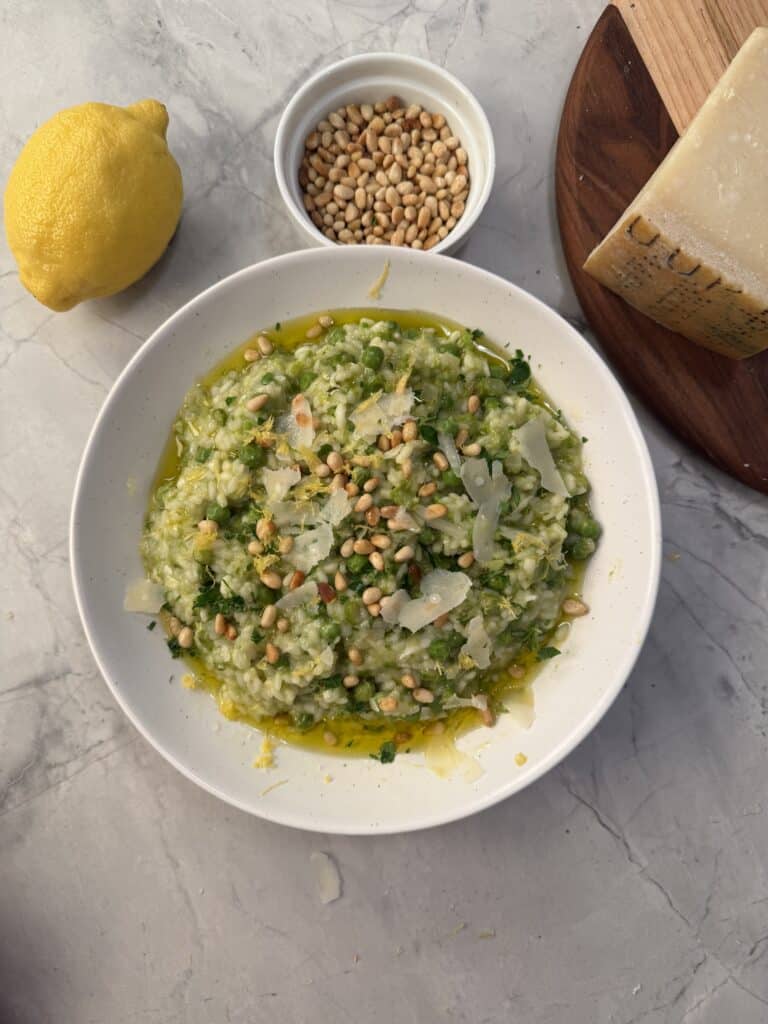
This Spring Risotto is creamy, bright, and gorgeously green. Sweet peas and asparagus get blended directly into the broth to create a silky sauce that tastes like spring. Finished with buttery shallots, toasted pine nuts, lemon zest, and plenty of Parmigiano Reggiano, this is the kind of dinner that feels restaurant-worthy without requiring a culinary degree or tweezers.
Because risotto is a dish that asks you to stay nearby and emotionally support it for thirty minutes straight, I don’t make it all that often. But this chilly spring had me craving something warm, colorful, and comforting. Suddenly, standing at the stove stirring rice felt less like a chore and more like therapy.
What Is Risotto?
Risotto is a traditional northern Italian rice dish made by slowly cooking arborio rice with warm broth until it becomes creamy and tender. Unlike standard rice recipes where liquid is added all at once, risotto is cooked gradually by adding broth little by little while stirring frequently.
The stirring helps release the starches from the arborio rice, which creates that signature creamy texture. A good risotto should feel fluid and silky, not stiff or dry. Italians actually describe properly cooked risotto as “all’onda,” which means “like a wave,” because it should gently ripple across the plate.

❤️ Why You’ll Love Spring Risotto
This Spring Risotto somehow manages to feel both rich and fresh at the same time. The arborio rice becomes creamy and luxurious while the peas, asparagus, and lemon keep everything bright and vibrant.
You’ll love this recipe if:
- You want a comforting dinner that still feels seasonal
- You’re looking for a meatless main course that actually satisfies
- You love recipes that look impressive but use simple ingredients
- You want a dinner party recipe that feels elevated without being stressful
- You’re trying to romanticize spring despite the weather behaving like late February
The blended vegetable puree is what makes this risotto especially good. It gives the rice a velvety texture and gorgeous green color without needing cream.
🍲 Spring Risotto Ingredients
The ingredient list for this Spring Risotto is simple, but every ingredient helps build flavor, texture, and freshness. It’s the kind of recipe where basic ingredients work overtime.
🌿 Fresh Peas-Sweet, tender, and packed with spring flavor. They also help create the vibrant green color.
🌱 Asparagus-One of spring’s greatest hits. It adds freshness and texture to balance the creamy rice.
🍚 Arborio Rice-This short-grain Italian rice is essential for risotto because its high starch content creates the creamy texture.
🧈 Butter-Butter adds richness and helps finish the risotto so it feels glossy and luxurious.
🧅 Shallots-Milder and sweeter than onions, shallots create a soft savory base.
🍋 Lemon Zest-The lemon zest wakes everything up and keeps the risotto from feeling too heavy.
🫒 Extra Virgin Olive Oil-Adds richness and a peppery finish.
🌰 Toasted Pine Nuts-The crunch against the creamy rice is elite behavior.
🧀 Parmigiano Reggiano-Salty, nutty, and absolutely necessary.
🍲 Chicken or Vegetable Broth-Warm broth is key for properly cooked risotto and builds flavor throughout the dish.
👩🍳 How to Make Spring Risotto
Step 1: Blanch the Vegetables. Add the broth to a saucepan and bring it to a boil. Add the peas and asparagus and cook for about 20 seconds, just until bright green and tender. Remove the vegetables with a slotted spoon and set them aside. Lower the broth to a simmer and keep it warm.
Blanching the vegetables quickly keeps them vibrant and fresh while also infusing the broth with spring flavor. It’s a small step that gives the finished risotto much more depth and color.
Step 2: Blend Some of the Vegetables. Add about 1 cup of the blanched vegetables to a blender along with ¼ cup broth, olive oil, and ½ teaspoon salt. Blend until smooth and silky.
This puree becomes the flavor base for the risotto and gives it its gorgeous green color. It also creates creaminess naturally without needing heavy cream.
Step 3: Cook the Shallots. In a separate saucepan, melt 2 tablespoons of butter over medium-low heat. Add the shallots and remaining salt and cook until soft and translucent, about 1 to 2 minutes.
The shallots create the savory base of the risotto. You’re not looking for caramelization here, just soft buttery sweetness that quietly builds flavor in the background.
Step 4: Toast the Rice. Add the arborio rice to the pan and stir frequently for about 2 minutes so the grains lightly toast.
Toasting the rice helps develop flavor while also helping the grains hold their structure as they cook. This is one of those little risotto techniques that makes a big difference in texture.
Step 5: Slowly Add the Broth. Raise the heat to medium-high and add one ladle of warm broth to the rice. Stir as the rice absorbs the liquid. Once the broth has mostly absorbed, add another ladle. Continue this process until all the broth has been used.
This gradual cooking process is what creates risotto’s signature creamy texture. As the rice slowly cooks and releases starch, the broth transforms into a silky sauce that coats every grain.
Step 6: Finish the Risotto. Stir in the blended vegetable puree, remaining peas and asparagus, and the final tablespoon of butter. Taste and adjust for salt as needed.
At this point the risotto transforms from creamy rice into full spring dinner energy. The vegetables brighten everything while the butter gives the risotto its glossy finish.
Step 7: Garnish and Serve. Spoon the risotto into bowls and finish with olive oil, lemon zest, toasted pine nuts, and plenty of Parmigiano Reggiano.
The final toppings balance the creamy texture perfectly. The lemon adds brightness, the pine nuts add crunch, and the olive oil makes everything taste just a little more luxurious.
🪄 Tips and Tricks
- Keeping the broth warm is one of the most important parts of making risotto because cold broth slows down the cooking process and can affect the final texture. Stirring frequently is also key, although you don’t need to stir nonstop. Gentle stirring helps release starch and keeps the rice from sticking.
- Don’t rush the process. The biggest mistake people make with risotto is rushing it. Risotto rewards patience and gradual cooking. It should also look slightly loose when finished because it continues thickening as it sits. Finally, finishing the risotto off the heat with butter and cheese helps create the glossiest, creamiest texture.
⚖️ Variations & Substitutions
This Spring Risotto is easy to customize depending on what you have on hand.
Make it vegetarian. Simply use vegetable broth instead of chicken broth.
Bump up the protein. If you’d like to add protein, grilled shrimp, salmon, scallops, or crispy pancetta all pair beautifully with the flavors in this Spring Risotto.
Swap the nuts. You can also swap the pine nuts for pistachios or almonds if preferred.
Swap the herbs. Fresh herbs like basil, mint, or chives work especially well here, and if you want an even greener risotto, blending spinach into the vegetable puree is a great option.
You Might Also Like
🫙How to Store & Reheat Leftovers
Store leftover risotto in an airtight container in the refrigerator for up to 3 days. The rice will naturally thicken as it chills, which is completely normal.

To reheat risotto, add it to a saucepan with a splash of broth, water, or milk and warm it gently over medium-low heat. Stir frequently until it becomes creamy again.
Leftover Spring Risotto Ideas
One of the best things about this Spring Risotto is that the leftovers are arguably just as good as the original meal. Cold risotto can be formed into crispy risotto cakes and pan-fried until golden brown. See my video to learn more. It also works beautifully for homemade arancini stuffed with mozzarella.
🤔 Common Questions
What rice is best for risotto?
Arborio rice is the most commonly used rice for risotto because its high starch content creates the creamy texture the dish is known for. Carnaroli rice is another excellent option and tends to hold its texture slightly better.
Do I have to stir risotto constantly?
No, you do not need to stir risotto constantly, but frequent stirring is important. Stirring helps release the starches from the rice, which creates the creamy consistency while also preventing the rice from sticking to the pan.
Can risotto be made ahead of time?
Risotto is best served fresh, but it can be partially prepared ahead of time. You can cook the rice about three-quarters of the way through, then finish it with the remaining broth right before serving.
What should risotto look like when it’s done?
Properly cooked risotto should look creamy and slightly loose. It should gently spread across the plate.
Spring Risotto
Ingredients
- 4 cups chicken broth, or vegetable broth
- 2 cups peas, fresh or frozen
- 12 asparagus, sliced into ¼ inch pieces
- 2 tbsp extra virgin olive oil, + more for drizzling
- 1½ tsp kosher salt
- 3 tbsp unsalted butter
- 2 shallots, minced
- 1¼ cup arborio rice
- ⅓ cup pine nuts, toasted
- 1 lemon, zested
- Parmigiano Reggiano
Instructions
- Add the broth to a saucepan and bring to a boil. Add the peas and the asparagus. Cook for 20 seconds, then remove the vegetables and set aside.
- Add 1 cup of the blanched vegetables, ¼ cup of broth, olive oil, and ½ teaspoon of salt to a blender. Blend until smooth.
- Lower the heat to simmer the remaining broth.
- To a separate saucepan, add 2 tablespoons of butter and melt it over medium-low heat. Once the butter has melted, add the shallots and the salt. Cook the shallots until translucent, about 1-2 minutes.
- Add the rice and let it toast for 2 minutes, stirring frequently as it toasts.
- Raise the heat to medium-high. Add a ladle of the simmering broth. Stir the rice as it cooks.
- Once the rice has fully absorbed the broth, add another ladle of broth. Continue this step until no broth remains.
- Mix in the blended vegetables, blanched vegetables, and remaining butter.
- Taste and adjust for salt. Serve and finish with olive oil, lemon zest, toasted pine nuts, and shaved Parmigiano Reggiano.
Nutrition
Nutrition information is automatically calculated, so should only be used as an approximation.